Roofing guides · Calgary

Nano roof coating vs bio-oil rejuvenation: what's actually different

Nano-silica penetrating treatments, soybean-oil rejuvenators, surface acrylic coatings, or nothing at all. The chemistry explained plainly, and an honest read on which one suits an ageing Calgary asphalt roof.

Written by Johnny Anderson, owner of Mountain Standard Roofing Ltd. · Updated 2026-09-01

There are now three different products that all get sold as "roof rejuvenation," plus a fourth option most people pick by accident: doing nothing. They are not the same chemistry and they don't do the same job. Here's the plain-English version, and an honest read on which one fits which roof.

First, how an asphalt shingle actually dies

You can't compare treatments without knowing what they're treating. An asphalt shingle is a fibreglass mat soaked in asphalt, with mineral granules pressed into the surface.

Asphalt is a mix of heavy molecules and lighter oils and resins. The lighter fraction is what keeps it soft and flexible. Two things happen with age:

The result is a shingle that used to bend and now cracks. Granules are the defence: Malarkey Roofing Products — Granule Sloughing technical bulletin notes that granules protect shingles and their asphalt binder from solar ultraviolet radiation. So granule loss and asphalt drying feed each other — bare asphalt ages faster, and stiff asphalt holds granules worse. GAF's hail bulletin makes the same point from the storm side: granule loss at impact points exposes asphalt and can cause premature ageing.

Now add Calgary. The City records 107.4 freeze–thaw cycles a year historically, 43.5 of them in winter, driven largely by chinooks. Each cycle drives water into whatever micro-cracks exist and pries them wider. That's why our roofs age on mechanical damage as much as on sunshine.

Option 1: nano-silica penetrating treatments

This is the newest category and it's what NanoClad Roof Shield is. Per the manufacturer, it's a spray-applied nanoparticle treatment that soaks into the shingle rather than sitting on top as a film, filling micro-crevices and forming chemical bonds within the material.

The claimed effects, all attributable to the manufacturer: restored flexibility, improved water repellency (a hydrophobic surface), reduced UV and weathering damage, reinforcement at a microscopic level so cracking and granule loss are delayed, and protection against freeze–thaw. It cures inside the shingle, is invisible once cured with no colour change, and the manufacturer states it's non-toxic and safe for people, pets and plants. Application is by trained, insured Certified Installers, with warranty options up to 15 years and eligibility set by a free inspection.

Where the logic holds up: mineral nanoparticle chemistry is about repellency and structural reinforcement rather than softening. In a hundred-freeze–thaw-cycle climate, keeping water out of micro-cracks is arguably the highest-value thing you can do to an ageing shingle.

Where to be careful: this category is young. There is far less multi-decade field data than there is behind the shingle itself, and independent long-term studies on Alberta roofs don't exist yet. Treat manufacturer performance figures as manufacturer figures — which is exactly how we present them.

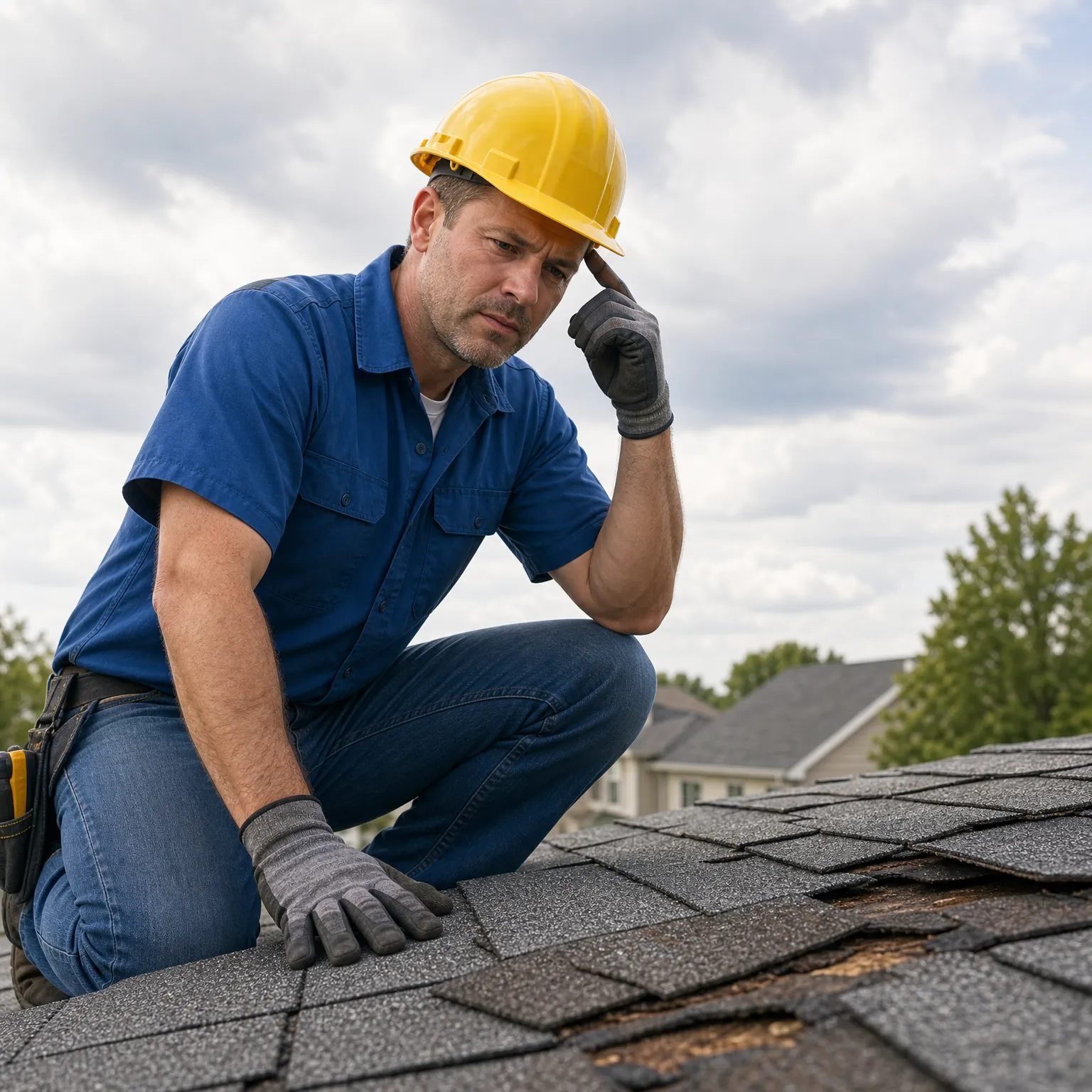
Close comparison of ageing asphalt shingles considered for nano coating or bio-oil rejuvenation

Same roof, four different answers. What separates them is whether the shingle still has asphalt worth saving.

Option 2: bio-oil rejuvenators (soybean-based)

These work on the drying-out problem directly. A plant-derived oil emulsion is sprayed on, soaks into the shingle, and acts as a plasticiser — it puts softness back into asphalt that has stiffened.

There's real published science here. An Iowa State University — Restoring Asphalt Shingle Integrity with Soybean Oil-Based Emulsions applied semi-epoxidised soybean oil emulsions to 3-tab and architectural shingles, both new and aged 15+ years, at 200 mL per square metre. All treatments improved granule retention. At the 10% concentration, aged shingles came back to flexural stiffness comparable to new shingles, with restored ductility and improved hail resistance. Notably, the 30% concentration was overly softened — more oil is not better.

Some products mix both approaches. GoNano, for example, describes nano treatments that include bio-oil for flexibility, with product tiers by roof age — under 5 years, 6–20 years — and lifespan-extension claims from up to 10 to up to 20 years depending on the system.

Strengths: directly targets embrittlement, which is the core failure mode of an old shingle. Peer-reviewed evidence that it restores measurable mechanical properties.

Limits: an oil is consumed and can migrate or weather over time, so re-treatment is part of the model. Dosing matters — too much softening is a real failure mode, per that study. And an oil is not primarily a water-repellency system, which is the piece that matters most in freeze–thaw.

Option 3: surface acrylic coatings

This is the old approach: an elastomeric or acrylic paint rolled or sprayed on to form a film over the shingles. It's cheap, it's been around for decades, and on steep-slope asphalt in Alberta we don't recommend it.

Acrylic and elastomeric systems do have a legitimate home — low-slope membranes and metal, not granulated asphalt shingles. If you have a flat section, that's flat roofing territory, and a different conversation.

Option 4: doing nothing

Sometimes the right call. If your roof is 5 years old, doing nothing and keeping the eavestroughs clear is fine. If your roof is 21 years old and cracking, doing nothing until you can fund a full replacement is also defensible — just don't do it through a winter with an active leak.

The bad version of doing nothing is the middle: a 14-year-old roof that's still sound, drying out quietly, that you ignore until it's a 19-year-old roof that no treatment can help. That window — roughly years 8 to 18 — is the only window where preservation is worth anything.

Side by side

ApproachWhat it doesPenetrates or films?Best fitMain limitation
Nano-silica penetrating treatment (e.g. NanoClad Roof Shield)Reinforces shingle internally, repels water, reduces UV/weathering damage (manufacturer claims)Penetrates; invisible once curedSound asphalt roofs roughly 8–18 years old in a freeze–thaw climateYoung product category; limited independent long-term field data
Bio-oil rejuvenator (soy-based)Plasticises stiffened asphalt, restores flexibility and granule retentionPenetrates; typically no filmRoofs that are dry and brittle but not yet cracking throughOil is consumed over time; over-application softens the shingle
Surface acrylic/elastomeric coatingAdds a film layer over the granulesFilms on topLow-slope membranes and metal, not granulated shinglesPeeling and blistering on shingles; changes appearance; not in shingle makers' instructions
Do nothingNothingVery new roofs, or roofs already past saving while you plan a replacementThe preservation window closes and doesn't reopen

So which one, honestly?

One more thing worth saying: no treatment makes a roof hail-proof. If hail is your worry, the answer is the roof system, not the chemistry — the City of Calgary recommends Class 4 impact-resistant shingles, and metal roofing is another route people in Alberta take.

Talk to us

We'll walk the roof, show you photos, and tell you which of these four your roof is actually in the market for — including "nothing yet." Call (587) 577-6170 or book a free inspection. We cover Calgary, Airdrie, Cochrane, Okotoks, Chestermere, High River and Strathmore. Next reads: rejuvenation vs replacement and what a coating costs in Calgary, or the NanoClad service page.

Questions homeowners actually ask

Straight answers

What's the difference between a roof coating and roof rejuvenation?

A coating in the traditional sense is a film that sits on top of the shingles, like a paint. Rejuvenation means a liquid that soaks into the shingle and changes the asphalt itself, either by reinforcing it with nanoparticles or by softening it with plant oils. Penetrating products don't change the roof's appearance; films do.

Do soybean-oil roof rejuvenators actually work?

There is published evidence that they do something measurable. An Iowa State University study applied semi-epoxidised soybean oil emulsions to shingles aged 15 years or more and found restored flexibility comparable to new shingles, better granule retention and improved hail resistance at a 10 percent concentration. The same study found a 30 percent concentration left shingles overly softened.

Is nano-silica better than bio-oil for Calgary roofs?

In a climate with more than 100 freeze-thaw cycles a year, water repellency and filling micro-cracks matter a lot, which is the nano approach's strength. Bio-oil targets brittleness more directly and has more published research behind it. Both are defensible on a sound roof. Neither helps a roof that has already failed.

Why don't you recommend acrylic coatings on shingles?

An acrylic film bonds to the granules rather than the shingle mat, so as granules release the film releases with them, which shows up as peeling and blistering. It also doesn't address the drying asphalt underneath, and it permanently changes the roof's appearance. Acrylic and elastomeric systems belong on low-slope membranes and metal.

Will any treatment void my shingle warranty?

Field-applied treatments are not part of any shingle manufacturer's installation instructions, so if your roof still has meaningful warranty coverage left, ask the manufacturer in writing first. In practice, most roofs at treatment age are deep into a prorated warranty that covers manufacturing defects only, so there's little value left to protect.

Can a treatment protect my roof from hail?

No treatment makes a roof hail-proof. Some testing suggests treated shingles handle impact better than untreated aged shingles, but that is not hail protection. If hail is the concern, the City of Calgary recommends Class 4 impact-resistant shingles, and metal roofing is another route Alberta homeowners take.

How do I know if my roof is past the point of any treatment?

Look for curling or clawing shingle edges, bare black patches where granules are gone, cracks running through the shingle, active leaks or attic staining, or an age past about 20 years. Any of those and the honest answer is repair or replacement. A free inspection settles it with photos rather than guesswork.

Sources

Want a real number for your roof?

We measure the roof, count the penetrations, look at the decking and give you a written quote with the scope itemised — free, no obligation. Bring us a written quote from another Calgary roofer for the same scope and we will beat it by $500.

Get your free estimate See our metal roofing work

★★★★★ 5.0 out of 5 — 10 Google reviews

Calgary homeowners rate us 5.0

Every review below is a verified Google review of Mountain Standard Roofing Ltd. Backed by our 10-year workmanship warranty and our $500 price-beat guarantee.

★★★★★

“Mountain Standard Roofing handled my storm damage roof replacement perfectly. They worked directly with my insurance company, handled all the paperwork, and made the entire process stress-free. The crew was professional, efficient, and left my yard clean.”

Nikki Rick — Google review

★★★★★

“John and his team were awesome to deal with. He did my roof and siding and they finished a day ahead of schedule. Not only was the service awesome but the price was much better than competitors.”

Kristoffer — Google review

★★★★★

“The owner John is very communicative and always took time to answer our questions. Our roof was re-done in the agreed timeline and for the agreed upon price. Would highly recommend doing business with Mountain Standard Roofing.”

Ryan Van Boven — Google review

Read all 10 reviews